 LOVING EARTH L.E.S.S.LOVING EARTH L.E.S.S.
You have the sustainability goal, the board that approved it, and nobody whose actual job is to run it. We run it every day: 243,456 lbs diverted this season across 184 locations, from a college campus to a Live Nation amphitheater's grounds, with the awarded five-county consortium grant behind us. L.E.S.S. brings that working crew, and the reporting your funders accept, to your institution.
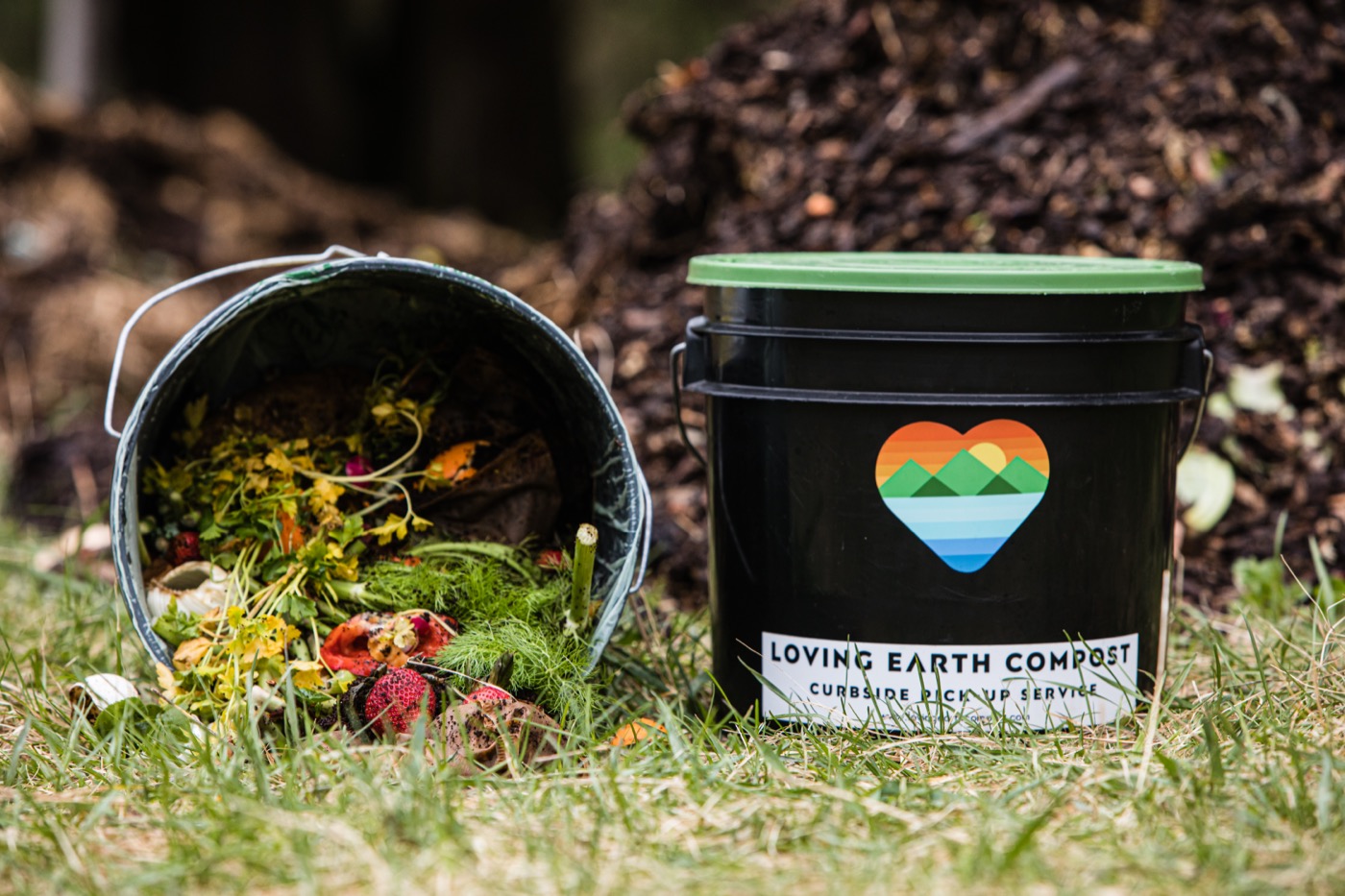
If you steward a campus, a venue, a district, or a mission institution, some version of this is your Tuesday:
If that reads like your desk, keep going. The numbers below are ours. The model is what you get. And if you steward a mission institution rather than a campus or venue, your version of this runs deeper: your section is here.
Food scraps diverted from landfill between November 1, 2025 and June 25, 2026. That is 121.7 tons, moved by a working local system, weighed and logged stop by stop.
service locations under management, commercial and residential
of tonnage from commercial and institutional accounts
car miles' worth of emissions avoided, per EPA equivalencies
tree seedlings grown ten years, the same math expressed in trees
| Skidmore College | 192,368 lbs |
| Avenue of the Pines (SPAC / Live Nation) | 17,244 lbs |
| Four Seasons Natural Foods | 5,173 lbs |
| Adelphi Hotel | 4,685 lbs |
| Schuylerville Central School | 1,719 lbs |
| Caffe Lena | 1,660 lbs |
| All commercial accounts (10) | 223,735 lbs |
| 164 residential households | 19,721 lbs |
tonnage diverted, 2026 annualised against our own 2022 to 2025 average
idea to submitted five-county state grant application. Awarded Sept 2025
CO2e prevented per year, projected under the awarded consortium workplan
our largest account, June and July year over year, after cost-engineered repricing
Source: stopSuite impact statistics across all 184 service locations, Nov 1, 2025 to Jun 25, 2026. Greenhouse gas equivalencies per EPA estimates, about 0.5 lbs CO2e avoided per pound diverted. Trajectory and grant figures from the Loving Earth OS proof package, Aug 31, 2026; items marked projected are forward estimates from the awarded workplan. Every number has a hauling log or a dated document behind it. Compiled by Hope LaBonty on the same operating system L.E.S.S. installs for clients.
Sustainability programs fail in the gap between the announcement and the operations. L.E.S.S. lives in that gap.
Your program stops depending on whichever staff member cares the most. Bins, signage, training, route logistics, hauling, and the composting itself, designed by people who run this daily at a college campus and a major amphitheater's grounds. We only design programs we would be willing to drive ourselves.
Your report season becomes an export instead of a scramble: pounds, tons, and GHG equivalencies, logged per location, monthly, in language your funders and board accept. The engine is Loving Earth OS, the same AI operator that runs our own books and found $33,456 in our own business. It ships installed on your machines, under the covenant: your data is your data.
You walk into the January 2027 board conversation with the plan already sequenced: where your organics go now, what they cost you, exactly where you land against the one-ton and half-ton thresholds, and the order of moves to get ahead of them. Institutions that move early set their own terms.
Pilots are scoped to the institution · engagements from $30,000
A pilot is the beginning, not the product. Institutions that run one keep the installed reporting system either way, and the ones that continue convert into multi-year operating partnerships scoped to their campus, calendar, and compliance obligations.
We take on a small number of institutional engagements at a time, because the farm comes first and because a pilot we cannot staff honestly is a pilot we will not sell you.
If you founded or steward a mission institution, a teaching farm, a food sovereignty organization, a land trust, you know the parts that never make the annual report:
Loving Earth OS is what we built from inside that exact squeeze. Not a chatbot. Your institution's memory, kept honest, working under your yes, on your own machines. The diversion program is where it starts; your whole back office is what it carries.
Books, inbox, reporting, and grant deadlines run by an operator that never asks you to re-explain your own institution. In fifteen months on our farm it surfaced $33,456, helped write an awarded five-county grant application in three days, and stood up a hiring pipeline in about three weeks after we lost two staff mid-season. The mission gets your hours back.
It runs from files on your own computers. We never host, store, or see your data, and nothing sends or moves money without your yes. The environmental cost is written down honestly, weighed against what it returns to the work. Your data is your data, and that covenant is in writing.
The seed file is free to every member of your network, forever. We train your own people to run install days so the capability stays in your community when we leave, and your diversion becomes weighed, logged, funder-ready impact. No dependency is the deliverable.
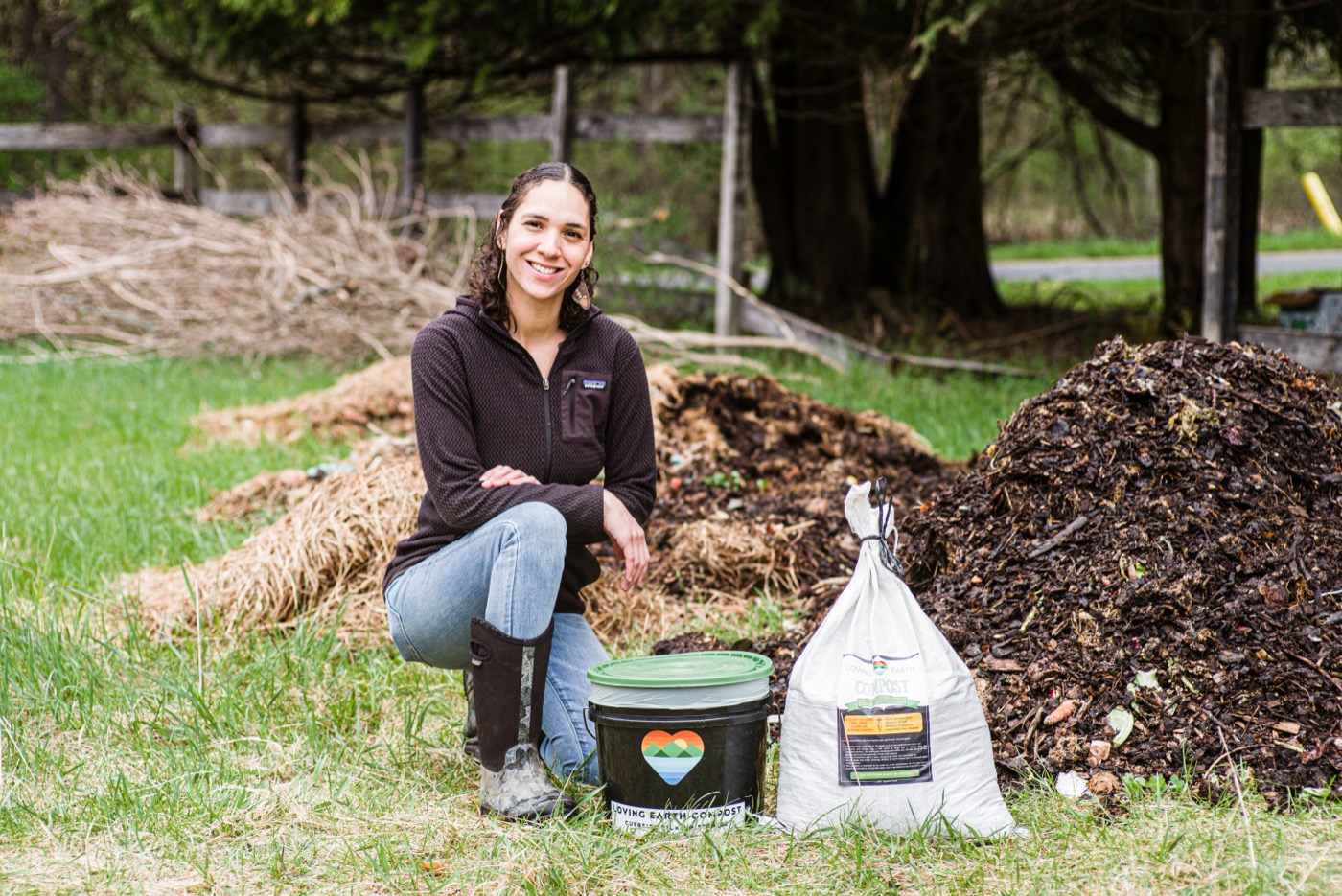
I'm Hope LaBonty. Loving Earth Compost is my farm in Greenwich, New York: Indigenous woman owned, built on the belief that healthy local food and land access belong to all people. Everything L.E.S.S. sells, we do ourselves, every week, with our own truck and our own hands.
The operations knowledge comes from the routes. The reporting engine comes from Loving Earth OS, the AI back office built with Devon Seegers that runs our own books under one rule: nothing sends and no money moves without the owner's okay. Your institution gets both: the practice and the instrument.
A campus, a venue, a district, a downtown. Two sentences is plenty. I read these myself and reply personally within two business days, usually with two or three times we can talk. The conversation is thirty minutes, free, and honest about fit either way.
If you run a farm, a shop, or a small operation rather than a campus or venue: start with the free seed file, or the $29 Gap Audit that packages the checks that found $33,456 in our own books. Same system, sized to you.
The farm comes first, so L.E.S.S. takes on a small number of institutional engagements at a time. Early institutions set their own terms. Book the pilot conversation.